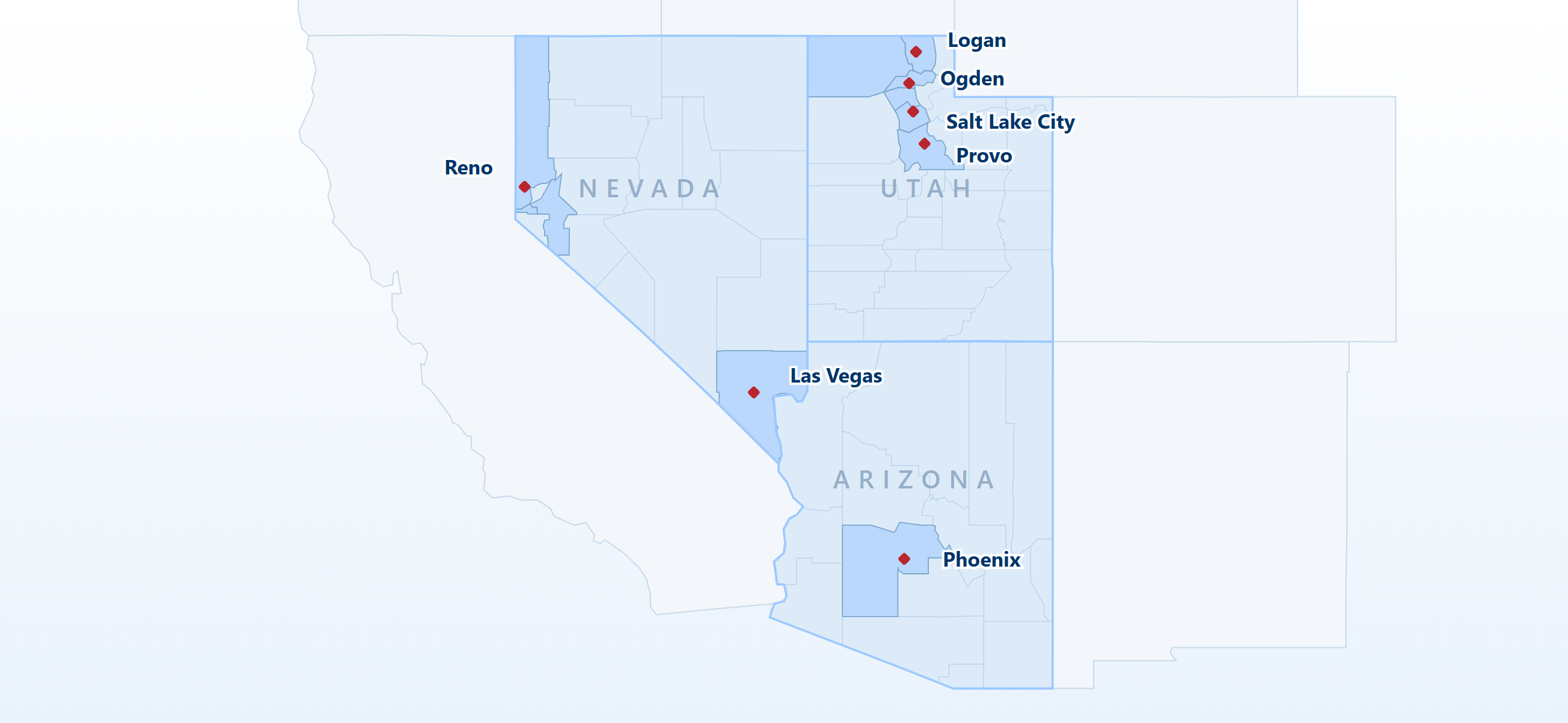
Northern Utah has a manufacturing story worth telling. From Brigham City through Ogden, Layton, Clearfield, and into Cache Valley, the region supports aerospace suppliers, composites and advanced materials, food processing, outdoor products, and precision machining. Many of these companies are small and family-owned. Many also sit inside supply chains for much larger customers.
That combination brings real opportunity. It also brings cybersecurity challenges that look a little different here than they do in other parts of the country.
Challenge 1: Supply Chain Expectations Are Rising
Northern Utah's proximity to Hill Air Force Base and its long aerospace and defense history means many local shops supply parts or services to defense contractors. Those customers increasingly expect suppliers to protect sensitive technical information.
Defense contracts that involve controlled unclassified information (CUI) carry requirements under DFARS 252.204-7012, which points to the security controls in NIST SP 800-171. The CMMC program added a certification framework on top of that. In July 2026, the Department suspended the planned shift to mandatory third-party CMMC assessments, but self-assessment and NIST 800-171 obligations remain in place.
Even manufacturers outside defense see similar pressure. Large customers in medical devices, automotive, and consumer products now send security questionnaires and expect clear answers.
Challenge 2: A Tight Labor Market for IT Talent
Northern Utah manufacturers compete with the Wasatch Front's growing tech sector for skilled IT people. A 50-person plant often can't justify a full-time security specialist, and the one IT person on staff is usually busy keeping printers, ERP, and the network running.
The result is a common pattern: security work gets pushed aside by daily support needs until a customer audit or an incident forces the issue.
Challenge 3: Older Equipment on Modern Networks
Many local plants have grown over decades. They run a mix of brand-new equipment and reliable older machines tied to aging computers. As plants connect equipment to ERP and cloud monitoring, those older systems become potential entry points.
Separating office and production networks and controlling remote vendor access are two of the most important steps a plant can take. Our plain-English guide to OT security explains why.
Challenge 4: Multi-Site Operations Across a Wide Region
Some Northern Utah manufacturers operate a main plant in one city and warehouses or satellite shops in another. Each site needs secure connections, consistent security settings, and backups. Without central management, sites drift apart and gaps appear.
Challenge 5: Seasonal and Weather Disruptions
Winter storms, canyon wind events, and power interruptions are part of life in Northern Utah. These aren't cybersecurity events, but they test the same recovery capabilities: backups, alternate connectivity, and clear procedures for restarting systems.
What Local Manufacturers Can Do
Know what you have to protect
Identify sensitive customer drawings, specifications, and contract data, and where they're stored. This is the starting point for any customer questionnaire or compliance effort.
Close the most common doors
Multifactor authentication on email and remote access, protected backups, and a separated production network address many of the incidents we see.
Prepare for customer questions
Keep a current, honest description of your security practices. Customers respond better to "here's what we do and what we're improving" than to vague promises.
Get help where it makes sense
Many plants pair their internal IT person with an outside provider for security monitoring, compliance preparation, and after-hours support.
A Regional Perspective
Northern Utah manufacturers succeed by being reliable partners: on-time, high quality, and easy to work with. Cybersecurity is becoming part of that reputation. Plants that can confidently answer a customer's security questions have an advantage over those that can't.
Maise Technology is based in Brigham City and supports manufacturers throughout the region. Learn about our local support through our Brigham City managed IT services and Ogden managed IT services pages, or see our full approach on our IT services for manufacturing companies page.
Have questions about where your plant stands? Get In Touch.