






BRATA malware was first spotted in the wilds by Kaspersky back in 2019.
Its earliest incarnation saw it targeting e-banking users and it was designed to steal banking and login credentials of anyone infected. That’s undeniably bad but according to researchers the latest version of BRATA has gotten downright nasty.
Security professionals have discovered a dangerous new variant in the wild that adds a raft of new features. One of the features includes allowing BRATA to steal a wide range of user data before resetting the infected device back to factory defaults when it’s done. That means it is essentially wiping away most of a user’s data.
Most users aren’t very good at backing up their data regularly and don’t always save their most cherished photos and videos to the cloud. So that could add a devastating personal loss on top of a hefty financial one.
The even worse news is that the hackers behind BRATA seem to be branching out.
In December of last year (2021) researchers started seeing BRATA pop up in Europe. Based on recently analyzed code samples, the group behind BRATA is beginning to experiment with variants custom tailored to the country or region it is released in. So far, researchers have found distinct variants targeting e-banking users in the UK, Poland, Italy, Spain, China, and Latin America.
The bottom line is that BRATA is a serious threat and the group behind the code is clearly setting their sights far beyond Brazil. This one is one to watch in 2022. If it’s not already on your employees’ radar it certainly needs to be. So make them aware of the potential threat as soon as possible.
The standard protection protocols apply here. Do your due diligence before installing any new app on your phone. Be sure you’re getting whatever apps you install from the Google Play Store direct. That’s not bullet-proof protection but it’s a solid beginning.
If you have Google Drive, there’s good news. The company has recently announced that soon they’ll be rolling out a new feature to help alert users to the presence of suspicious documents.
Google Drive users will soon start seeing banners alerting them to possible dangers This will serve as an additional layer of defense that will hopefully keep people from clicking on links embedded in malicious files, which may guide victims to poisoned sites.
The company first announced the new feature back in October during the Google Cloud Next 2021 user conference.
The company explained the functioning of the new feature as follows:
“If a user opens a potentially suspicious or dangerous file in Google Drive, we will display a warning banner to help protect them and their organization from malware, phishing, and ransomware.
Google will automatically evaluate any files that are shared with you from outside of your organization for phishing or malware. If detected, Google will block your access to the file in order to protect you.”
As to the message, Google kept it simple.
If you open a suspect file, you’ll see a bold yellow banner across the top of your screen with a message reading:
“This file looks suspicious. It might be used to steal your personal information.”
This is the latest in a series of moves the company plans to make to help protect its user base and prevent Google Drive abuse. Last year the company added phishing and malware protections in their Enterprise environments that automatically tagged all suspicious files and only left them visible to their owners and Admins.
It’s a small change but it could have significant impacts. That means fewer users getting taken in by malicious documents and that’s a very good thing. Kudos to Google for continuing to add user protections.

Hackers have recently hit upon a new money-making scheme. Some groups have started breaking into Instagram accounts belonging to people with high numbers of followers.
They are then holding those accounts hostage until the owner agrees to pay the ransom. In some cases, the hackers are charging as much as $40,000 USD to return an account back to its user.
They’re gaining control of the accounts initially via some clever social engineering. The attack begins when the hackers contact the Instagram user claiming copyright infringement.
The email they send contains a link that takes the victim to a website the hackers control. The user is prompted to enter their Instagram account information (username and password) which of course is harvested by the hackers.
Once they have that they log in and immediately change the victim’s password.
They then modify the account profile so that it includes the phrase:
”this Instagram account is held to be sold back to its owner,” followed by a contact link.
Clicking the contact link opens a WhatsApp chat session where the hackers make the ransom demands and wait. If the victim doesn’t initiate contact via the profile link, the hackers will start sending text messages to the phone number associated with the account. Either way, the negotiation process begins
Security researchers who have begun investigating the scam have concluded that at least one of the threat actors involved is based in Turkey.
At this point, there is no reliable information about how many Instagram attacks have been compromised in this manner. There also isn’t any information about how much money the hackers have made in total via this approach. If you are an Instagram user and you have an impressive number of followers it pays to at least be aware of the possibility.
Google partner Zimperium zLabs has recently discovered a sophisticated scam targeting more than 100 million Android users. The scam has been in operation right under Google’s nose for nearly two years.
The scam has now been shut down by Google but while it was in operation, it spanned some 470 Android apps on the Play Store. It was quietly subscribing users who installed the infected apps to a premium service that charged $15 USD per month through Direct Carrier Billing (DCB).
The decision to leverage DCB is both brilliant and terrifying. It’s a legitimate mobile payment option that allows people to pay for digital content from the Play Store either via their pre-paid balance or post-paid with a bill.
Oftentimes, a user would be subscribed to a premium service for months before they noticed. While that was happening, the scammers behind the attack (dubbed Dark Herring by the group that discovered it) were raking in profits from some 106 million Android users spread over more than 70 different countries.
Each of the hundreds of different apps that were infected with the malware had a different identifier. That means the scammers were able to track (with some granularity) which apps were bringing them in the most illicit profits.
One thing that this attack really underscored is how hard it is to stop something like this that has a global footprint. Consumer protection laws vary wildly from one country to the next. So while users in some countries may have legal recourse, users in most other countries have no protection at all. They’re simply out the money.
In any case kudos to the folks at Zimperium for their sharp eyes and to Google for taking swift action to dismantle the campaign. Unfortunately, the fact that it’s now defunct is small consolation to the millions who lost money while it existed.

There’s good news for Apple users.
The company has been busy and has recently released security updates that address two Zero-Day vulnerabilities. These are security flaws that could be exploited by hackers to cause no end of trouble to anybody running macOS or iOS.
The first Zero-Day addressed is being tracked as CVE-2022-22587 and is a nasty memory corruption bug that impacts macOS Monterey, iPadOS and iOS.
The second issue the company focused on was a Zero-Day bug in Safari’s WebKit and it impacted users running iPadOS and iOS. Tracked as CVE-2022-22594 this allowed websites to track your browsing activity and user identities in real time.
If you’re running an OS version earlier than 15.3 you are vulnerable to both exploits. Note that Apple has found evidence that they are actively being exploited in the wild. To protect yourself you’ll want to update to 15.3 as soon as possible.
These two represent the first Zero-Day bugs that Apple has tackled in 2022 which makes them significant. It’s also proof positive that the company isn’t sitting back and resting on its laurels. They’re actively taking the fight to the hackers and addressing security flaws head on and at a rapid clip.
It’s very good to see but last year Apple seemed to be chasing an unending stream of Zero-Day flaws. Here’s hoping that this year will see relatively fewer of them. Even if that proves not to be the case, Apple has and continues to demonstrate how seriously they take the security of their user base.
Whatever happens one thing we can say with certainty is that 2022 is bound to be an interesting year.
Again Kudos to Apple for their rapid response and if you’re an Apple user check your OS version to make sure you’re protected.
One of the most persistently frustrating aspects of our highly interconnected world is that we seem to exist in at least three different distinct ecosystems.
Apple users live in the Apple ecosystem which encompasses both its mobile products and its PCs. Windows users live in the Windows ecosystem which encompasses both laptops and desktops but leaves mobile devices out in the cold. Of course, Android users live in their own ecosystem which is mobile-centric. By design there’s almost no overlap between these spheres and that’s a pity.
Microsoft thinks so, too. As part of their ongoing Windows 11 development they’re rolling out a feature that will allow users to run Android apps in a virtualized environment on their PCs.
This is huge news and a first tentative step that begins to bridge the divide between the various ecosystems. Imaging installing a fun game on your Android based phone and then being able to pick up where you left off when you’re sitting at your Windows PC.
Or imagine downloading some type of productivity app on your Android phone and leveraging your PC to get even more out of it. Both of those are now possible with the latest release of Windows 11.
If you’re an early adopter of Windows 11 you probably already know what the most recent build contains. If you aren’t aware, in addition to the Android app functionality the latest build also sports a new look for Notepad, Media Player, and a raft of taskbar and other improvements.
Even better is that the company is reporting that Windows 11 adoption rates are even higher than the impressive Windows 10 adoption rates were. That bodes well for the company and signifies a broad-based acceptance of the company’s latest OS. Exciting times indeed and kudos to Microsoft for beginning to bridge the divide.
There is a new phishing campaign to keep a watchful eye on according to email security firm INKY. It’s a particularly fiendish one.
The attackers have designed an email template that does an admirable job of imitating the look and feel of emails sent from the US Department of Labor.
These are being sent out to recipients asking them to submit bids for an ongoing DOL project with the specifics of the project varying from one email to the next.
The emails are professionally and meticulously arranged. Thanks to some clever spoofing they appear to come from an actual Department of Labor server. Naturally they do not come from the DOL, and there are no ongoing projects that require the Department of Labor to blindly spam out emails seeking bids.
Nonetheless, an unwary recipient could easily be taken in by the scam and click the “Bid” button embedded in the email. That button is of course masking a malicious link which will take the email recipient to one of the phishing sites controlled by the scammers.
Like the emails themselves, these spoofed sites look completely legitimate. A comparison of the HTML and CSS on the scam sites with the actual Department of Labor reveals that they have identical code behind them which is clear evidence that the scammers scraped those sites and used the code to create their own copies.
What’s different is the fact that the scam site includes a pop-up message that is there seemingly to guide the email recipient through the bidding process. What it’s really doing is moving the potential victim closer to giving up his or her Office 365 credentials.
Of interest is that after a victim enters his/her credentials they’ll be prompted to enter them a second time. This is to minimize the risk of the scammers harvesting mis-typed credentials. They seem to have thought of everything!
There’s no good defense against this except for vigilance and mindfulness so please make sure your employees, friends, and neighbors are aware of the ongoing campaign.
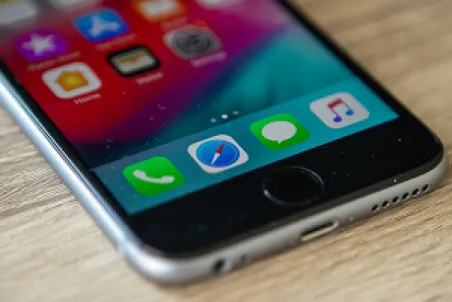
When Apple first released iOS 15 they posted a promise on their website.
That promise was:
“If you’re using iOS or iPadOS 14.5 or later, you might now see the option to choose between two software update versions. This option allows you to choose between updating to the latest version of iOS or iPadOS 15 as soon as it’s released, or continuing on iOS or iPadOS 14 while still getting important security updates for a period of time.”
Although the promise specifically states “for a period of time” many users assumed it would be forever or at least indefinitely. It isn’t and Apple just pulled the plug on iOS 14 support. There won’t be any more.
In some ways that’s disappointing but it’s not really a surprise. It is disappointing because most companies continue offering support to older products for a full year at least and in Apple’s case it hasn’t been that long.
On the other hand, it is not surprising because it’s clear that Apple really wants people to upgrade to iOS 15. If it gets a little too heavy-handed to make that happen the company has now demonstrated a willingness to do so.
Unfortunately, based on Apple’s own statistics fully 30 percent of their user base is running iOS 14. That means by pulling the plug they’re essentially leaving about a third of their user base to fend for themselves in terms of security updates they’re no longer getting.
Yes this will provide a powerful incentive for them to upgrade but given Apple’s reputation, that seems a bit out of character.
At the root the issue is that Apple wasn’t transparent with the timeframe. “For a period of time” could mean almost anything. Apple clearly meant for it to mean “for a short period of time” but many of their users didn’t interpret it that way. As a result, there’s bound to be some bad blood over this.
In any case if you’re currently running iOS 14 upgrade as soon as possible because no further security updates are coming.
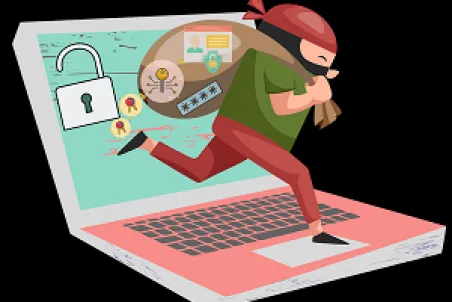
Scammers delight in impersonating government agencies and well-known brands to lure email recipients into giving up their personal information. That information is then either exploited directly or sold to the highest bidder on the Dark Web.
Have you ever wondered which agencies, companies or brands are the most imitated by these attackers?
Whether you have or not it should come as no surprise that someone is tracking that. Security firm Checkpoint is tracking it to be precise.
Quite often Microsoft tops the list but this year they’ve been dethroned by shipping company DHL. That may not be surprising given the realities of the pandemic and the rise in popularity of online shopping.
Here is the list of the top ten for this year from their report:
DHL (impersonated in 23 percent of all phishing attacks, globally)
Microsoft (20 percent)
WhatsApp (11 percent)
Google (10 percent)
LinkedIn (8 percent)
Amazon (4 percent)
FedEx (3 percent)
Roblox (3 percent)
Paypal (2 percent)
Apple (2 percent)
The specific lure used in each of these cases varies wildly. For instance, when a scammer spoofs a shipping company the email is typically some variation of “we’re trying to deliver a package to you but are having problems, press this button for more information.”
While PayPal scams typically go the route of “Your account has been temporarily suspended. Please click here to verify your information.”
Microsoft and Google are commonly spoofed in various software giveaway schemes. Or in the case of Google some variation of “click here to claim your free Chromebook.”
Now that you are armed with a list of the most often imitated brands you at least have a list of things to be on the lookout for. The best defense is vigilance just like always. If it sounds too good to be true it probably is and don’t ever click on embedded links even if you think you know and trust the sender.
