







If you’re an early adopter playing with the Windows 11 builds as they come out and you are a “Windows Insider,” then you probably already know this.
In the latest build, users were treated to a raft of new improvements and enhancements including a new Windows 11 video editor called Clipchamp. The build with the Clipchamp addition is 22572 and is now available in the Dev Channel.
The Windows 11 Development Team had this to say about the new feature:
“Clipchamp is equipped with all the basic tools you’d expect, like trimming and splitting, as well as more pro-style features like transitions and animated text. For real-time content capture, there are also built-in webcam and screen recorders.
But what really sets Clipchamp apart from other video editors is its timeline. We’ve kept all the best parts of timeline editing — the flexibility, the ability to fine tune details — and done away with the rest.”
The new software comes with a stock library of more than a million royalty-free videos, audio tracks, images, and a powerful text-to-speech generator with support for more than 70 different languages. The generator will be powered by the company’s Azure technology. Anyone making use of the new tool can easily connect with users’ OneDrive accounts to import files or save videos quickly, safely, and securely.
It’s a significant change and according to the company, it may well be a permanent one. Knowing that Microsoft invested significant resources into Clipchamp, there’s very little reason to keep Movie Maker around. However, if the company faces an open rebellion like they did when they tried to retire Paint, it may be possible to change their mind.
Users should get used to the idea that there’s a new sheriff in town when it comes to video editing in Windows called Clipchamp!
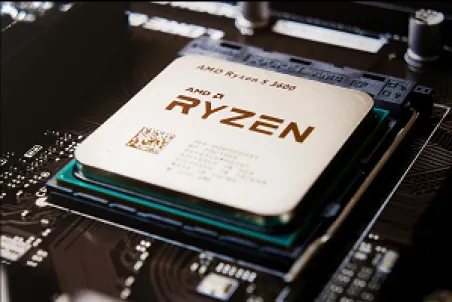
Do you have a PC with an AMD Ryzen CPU? If so, be aware that AMD has found an issue which causes “temporary pauses in system interactivity or responsiveness.”
The issue affects some Windows 10 and Windows 11 systems with the Firmware Trusted Platform Module (fTPM) enabled.
If you’re not familiar with it, the fTPM handles cryptographic operations and is one of several minimum hardware requirements systems need to have in order to get support for Windows 11 installations. In other words, you can’t get support for your OS unless you are hardware compliant, and you can’t be hardware compliant unless you’ve got fTPM enabled.
Apparently, users have been complaining about these issues since January but it has taken some time for AMD to research a proper explanation for why it is happening.
Apparently, the root cause can be traced back to the following.
The Company States:
“Select AMD Ryzen system configurations may intermittently perform extended fTPM-related memory transactions in SPI flash memory (“SPIROM”) located on the motherboard.”
And this can lead to what the company is describing as “a performance stutter.”
Reddit users who have been tracking the issue say that it happens 3-4 times a day, regardless of what programs are running and tends to last about 2 seconds.
Now for the good news. The company has a temporary workaround you can make use of which is detailed on their site.
AMD had this to say about a BIOS update that will fix the issue once and for all:
“AMD expects that flashable customer sBIOS files to be available starting in early May, 2022. Exact BIOS availability timing for a specific motherboard depends on the testing and integration schedule of your manufacturer. Flashable updates for motherboards will be based on AMD AGESA 1207 (or newer).”
In the larger scheme of things, a two second stutter isn’t the end of the world, but it is annoying. If it’s happening to you, either head to the AMD website for the workaround or hang on until late May. A fix is coming.
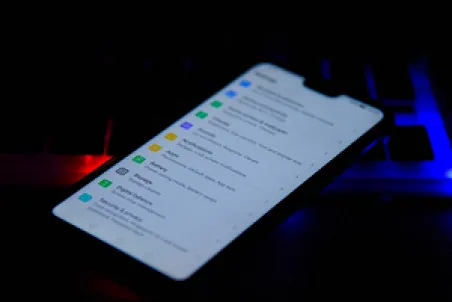
The problem with smartphones is that they eventually run out of room. Honestly it’s a wonder the issue isn’t even bigger than it is. After all, miniaturization isn’t cheap but smartphone manufacturers have been able to cram incredible amounts of storage into tiny spaces.
The day is coming when you’re going to run out of room on your trusty Android phone and Google knows it.
That’s why they’ve been working hard to come up with a solution. A few years ago, Google made a change to their Android OS and the OS began making helpful suggestions regarding apps you almost never use. If you get rid of those you save some space, and that helped.
Unfortunately, some apps are important even if you don’t use them a lot and it forces users into a bit of a tricky spot. Uninstalling apps is a good start but it’s far from a perfect solution.
The good news is that Google has another idea that will be making its way to the Android OS in the months ahead. They’re testing out a new feature called ‘Archiving’ where apps are only partially uninstalled rather than completely uninstalled.
Archiving keeps the user’s data intact and gets rid of everything but that. Then if the user decides they need to run that app again they can restore the app and continue on with minimal fuss.
That combined with linking your phone to your cloud account and offloading your pictures and videos at regular intervals will go a long way toward freeing up space on your phone.
We’re not saying you’ll never have space issues again. However, if you do all three (uninstall apps you’re not using, archive apps you use infrequently, and regularly offload your photos and videos), you’ll get a lot more mileage out of your phone.
Samsung’s corporate network was breached recently. That’s bad news all by itself. The company has recently confirmed that in addition to the confidential customer information that was stolen, the hackers also made off with the source code for the software used in the company’s Galaxy smartphones.
The hackers responsible for the attack call themselves “Lapsus$.” Not long after their attack, they disclosed that they had made off with almost 190GB of archives.
Disturbingly, this group has been exceedingly busy so far in 2022 and extremely successful. Just a week prior to the announcement regarding Samsung’s data, the same group released a 20GB sample of documents stolen from Nvidia. The group claims that this sample is part of a collection of stolen documents more than 1TB in size.
Aside from the aforementioned source code at this point, we do not know exactly what sorts of data the group of hackers may have compromised when they successfully breached Samsung’s network.
For that matter, we do not yet know the full extent of the contents of the 1TB cache documents stolen from Nvidia because as members of Lapsus$ explained, they are currently in negotiations for the sale of that data.
This is the world we live in. This is the shape of 2022 and years to come. What the long-term implications might be are anyone’s guess but fortunately, the advice for guarding against such attacks remains largely the same.
Be sure the software you use is updated with the latest security patches and constantly educate and reeducate your employees about the dangers of phishing campaigns to minimize your risk.
Failing that, take regular backups and have a rapid response team standing by that can spring into action if your defenses fail. That’s by no means a perfect solution, but it will make you a significantly harder target and there’s value in that.

Here’s a statistic you’re not going to like. Based on research conducted by cybersecurity researchers at Proofpoint, there has been a staggering 500 percent increase in malware attacks against mobile devices during the opening months of 2022. The most significant peak so far this year occurred at the end of February.
Most of the malware that targets mobile devices tends to be relatively benign. It’s unlikely to encrypt all the files on your phone and demand a ransom. Although there are admittedly some malware strains that do that, if your phone is infected with malware, it will likely be of the variety that quietly roots through your phone and steals usernames and passwords.
In some cases, you may get infected with a malware strain designed to take screenshots or track your location over time. Again, these are exceptions and not the rule. Even so, malware that steals your account information can be devastating in the longer term. Hackers can use that information to steal your identity, drain your accounts, max out your credit cards, and more.
There are three primary paths hackers use to get malware onto a target Android or iOS device.
The first and the most common is to poison an app and get it placed on either the Apple Store or the Google Play Store. From there, users will download and install it while completely unaware that they have also installed malware.
SMS texts are another popular avenue of attack, which is why security professionals warn users against tapping links in text messages. These may be harmless from a dear friend of yours or may have been put there by a hacker pretending to be your friend. When you tap the link, you’re taken to a poisoned website which installs malware in the background.
Finally, there’s email. By now everyone has heard the dire warnings against clicking on links embedded in email messages or opening file attachments. This applies whether you’re reading your mail on your phone or your PC.
The bottom line is that you are increasingly a target whether you’re on your PC or your phone. Be careful.
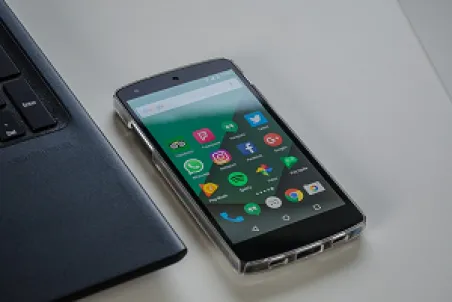
Do you use Google Messages? If so, there’s good news! In recent months, the company has taken steps to bridge the Windows and iOS ecosystems the Android ecosystems and the iOS ecosystems.
They’ve been creating a more seamless user experience and allowing users from those various ecosystems to communicate and share more easily.
The latest update to Google’s Messages app for Android includes a whole raft of new features. Of special significance, users will now have access to iOS reactions. If you’re not familiar with these, they are a small handful of Emojis that capture the essence of the most common reactions people tend to have toward messages they receive.
In addition to that, Google’s latest update also adds support for sharing links to Google Photos into Messages and allowing the sending of full-quality photos and videos to non-RCS users on iOS. In a similar vein, if you send a Youtube video link from an Android device to an iPhone the recipient will now get a preview of the video.
The latest version of Messages also includes several “quality of life” enhancements. These include the ability to automatically delete one-time password messages after 24 hours and the option to sort your inbox into personal and business-oriented massages to help you stay organized.
If you haven’t updated to the latest version of Google Messages and are excited to give these new additions a try, just head to the Google Play Store and download the latest for free. It’s a very good update that gives you some fun new capabilities you’ll enjoy playing with.
It’s also worth mentioning that Windows users can access their Android messages on their PC from a browser tab. So the company really has come quite a distance in terms of tying the ecosystems together. Kudos to Google for their continuing efforts!
Do you own an Ionic smartwatch? If you haven’t heard yet, be advised that Fitbit has issued a voluntary recall of the devices produced between 2017 and 2020.
It’s also worth mentioning that at the start of this year (2022) FitBit was acquired by Google. So if the contact information you see on the FibBit website is no longer accurate, Google will be able to point the way.
Based on company statistics, more than 1 million Ionic smartwatches are impacted by the recall. If yours is one of them, you can return your device for a $299 refund.
The company cited burn risk as the reason for the recall. Although at present, neither the FitBit engineers nor the engineers at Google have been able to get to the root cause of the issue. All they know so far is that “in very limited instances the battery in the Ionic smartwatch can overheat, posing a burn hazard.”
In addition to the offered refund, users impacted by the Ionic recall will be given a special discount on select FitBit devices, bands, and services for a limited (but unspecified) time.
The easiest way to determine if your Ionic smartwatch is impacted by the recall is to simply check the back of the device. If it displays the model number as “FB503” then it’s included in the recall.
The company released an official statement regarding the matter which reads as follows:
“Customer safety is always Fitbit’s top priority and out of an abundance of caution, we are conducting a voluntary recall of Fitbit Ionic smartwatches. We received a very limited number of injury reports – the totals in the CPSC announcement represent less than 0.01% of units sold – of the battery in Fitbit Ionic smartwatches overheating, posing a burn hazard. These incidents are very rare and this voluntary recall does not impact other Fitbit smartwatches or trackers.”
And now you know! If you have one of the affected devices, take full advantage of the refund and offered discounts.
Thanks to the fine folks at Palo Alto Networks we have a better view of the relative safety and security of network-capable medical devices. Unfortunately, the news is grim.
Based on their findings after examining more than 200,000 infusion pumps, about half are vulnerable to critical security issues.
Yes you read that correctly. That’s 100,000 infusion pumps that are critically vulnerable to hacking attacks. To put it another way, that’s 100,000 chances every single day that someone is going to initiate a hacking attack that will actually kill someone.
What’s worse is that of the eleven security vulnerabilities identified by their research, no one is making it a priority to fix the issues. Even if they did try to fix it, it’s anyone’s guess how quickly those devices would be updated or if they would be updated at all.
This is not unique to the world of “smart” medical devices either. In fact, as the Internet of Things (IoT) grows, one of the biggest security challenges we face will be how to better secure those legions of “smart” devices. That is because most product manufacturers send them out the door with little to no protection, and often in the cases of devices with protection it’s so marginal as to be practically nonexistent.
Of course, part of the problem lies in the fact that product manufacturers aren’t on the hook if a product they sell without security or with fatally flawed security gets hacked. That will likely change but it hasn’t so far. So there’s very little incentive for manufacturers to improve.
In any case, if you or someone you know uses a “smart” infusion pump be aware that based on Palo Alto’s research more than half of them (52 percent) are incredibly easy for hackers to take control of and that’s terrifying.
It’s 2022 and after years of warning people repeatedly about the dangers of using the same old passwords and using the same password across multiple websites, you would think this would get better. You would think we’d have that problem solved and there would be one less network security risk to worry about.
Unfortunately, if you think that you would be wrong.
Even now, after endless hours of email safety training and articles just like this one published by the hundreds all over the web, people are still gravitating to the same garbage passwords and still reusing them across multiple websites they frequent.
In fact, it’s even worse than that, if recent research by SpyCloud is any indication. They poured over data containing 1.7 billion username and password combinations gleaned from 755 leaked sources in 2021. Based on their research, a staggering 64 percent of people are still using the same password exposed in one data breach for other accounts.
Keep in mind that Google now comes right out and tells Chrome users how many of their saved passwords are at risk for exactly that. Even with the information staring them in the face, significantly more than half of all users won’t change their habits.
These statistics must be taken with a grain of salt because the methodology is somewhat imprecise. It doesn’t matter if the actual percentage is five points or so lower becausethe broader issue remains the same.
By now, everyone knows the risks that bad passwords pose. Everyone is aware of the dangers of using the same password to access multiple web properties and yet, nothing is changing.
Until there is a tangible financial cost imposed, either by companies beginning to fine users with bad passwords or hackers taking full advantage of those weak passwords and financially punishing those using them, it’s not going to change. It’s a real pity it has come to that.
